
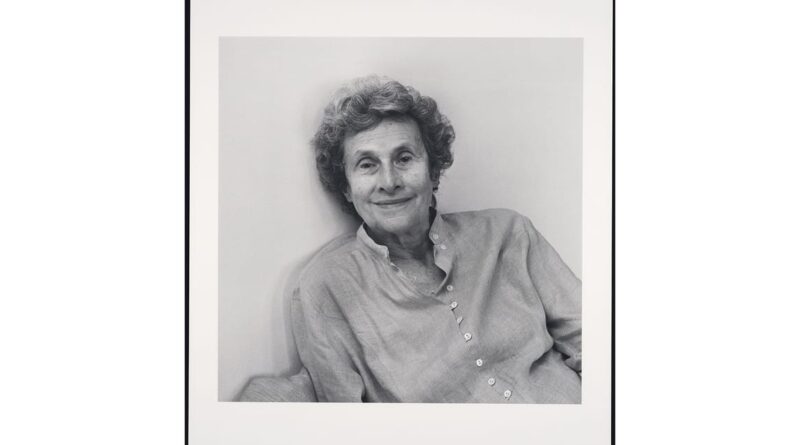
In “The Dream-Tossed Bronx”: An Introduction to Poet Naomi Replansky
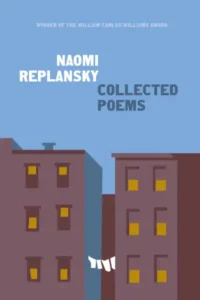
Naomi Replansky (1918–2023), born in the Bronx to Russian-Jewish parents, won a 2012 award from the Poetry Society of America for her plain-spoken poems describing injustice and violence, and love and aging. Her Collected Poems (Godine/Black Sparrow Press, 2012), currently in its fifth printing, gathers work from her first book, Ring Song (1952); her second, Twenty-One Poems, Old and New (1988); her third, The Dangerous World (1994); and from new and uncollected poems as well as translations from German and Yiddish poets.
Replansky, who grew up in a working-class home, became a member of the Communist party in the 1930s and ’40s. Inequality and discrimination, ever present in American life, are among the primary themes of Replansky’s work, but she also wrote of life’s possibilities and surprises. In her Collected Poems, Replansky adopts many personae—among others, the blind man, the lover, the refugee, even a famished feline.
In “The Ratless Cat” (1934), written during the depths of the Depression, Replansky imagines a frustrated dialogue in a household of hungry cats. Each family member echoes the other’s distress as they return home empty-handed. During the Depression, the cats, like characters in children’s books, suffer from the same circumstances as humans—but Replansky’s rhyming couplets lighten their desperate situation:
When I came home without a rat
Mom, pop, brother, sis, and grandpa cat
Took one long look, gave one loud groan,
When I came home, when I came home.
In “A Ratless Cat” and other poems, Replansky uses rhyme and repetition to develop a characteristic point of view. These elements are put to work in her ballad “The Money Tree” (1940), in which she describes the life and death of an honest woman in a capitalist system. From the first lines, delivered by an unnamed, pontificating speaker, one suspects what the conclusion will be. The speaker says:
—When you are tall, you who are small,
Then take this word from me:
It’s only your brow’s honest sweat
Will grow the money-tree.
The next stanza contains the now-grown woman’s response:
—Now I am tall my sweat falls down,
And honest all the time,
But scant and silver is the yield,
And thin as the thinnest dime.
The rhyming second and fourth lines of each quatrain create the energy that propels the tale of the young woman, who marries “some poor guy with a loving eye” rather than the recommended “wealthy man,” to its conclusion:
Now when she died she died in pain,
In honest sweat died she.
Then with the special eyes of death
She saw the money-tree.
Its roots were knotted in her hands,
Sprang from her hair and hide.
It was from herself, herself,
The tree grew fair and wide,
While strangers plucked the last green buds
Before she wholly died.
Despite her lifetime of “honest sweat,” the woman faces inevitable poverty (“the cards are marked, the dice are fixed”). Replansky’s message on behalf of workers’ struggles reaches a climax when the honest woman realizes that it was “herself, herself” whose exploitation grew a money tree. To Replansky and those in her milieu, the work of an honest person is plucked clean for gain by the capitalist owners of the means of production.
Replansky was not afraid to describe the conflicts of the twentieth century. The images in the following short poem from 1943 recall the breaking of windows during the November 1938 Kristallnacht. Replansky strikes the reader’s ears with a burst of short sentences:
A brick not used in building
Can smash a windowpane.
For anyone with ears to hear
Let it be said again.
A brick not used in building
Can smash a windowpane.
The repetition of the harsh sounds of pane and again intentionally generates unease. Furthermore, the line “A brick not used in building” may be interpreted variously. This brick could have come from a home reduced to rubble by violence. Or the brick has purposely been taken from a worksite to be used as a weapon. It is charged with potential energy. In the poem, the customary way of seeing bricks as part of an edifice is shattered—like a windowpane.
Yet Replansky also acknowledges that life can offer moments of solitude. Moving from scenes of strife and exploitation, she interrogates the possibilities of a new day in “The Visitor” (1945):
This day a simple day
That comes for a visit
That comes to sit quiet.
Yet I in such small grace
Receive my visitor.
I watch it narrowly
And wonder: Friend or foe?
[…]
But this is a mute and unassuming day.
And is a good guest
And brings small gifts
I must learn again to give it welcome.
There’s a noticeable quiet to the poem. Without rhyme or repetition, the poem and the day unfold, “mute and unassuming.” For a poet who is drawn to rhyme, this poem achieves a kind of floating quality, as if existing in a time and space separate from the events of the world. Replansky can envision the potential in a new day despite the violence at home and around the world.
Replansky’s career as a poet developed slowly over her long life. After graduating from high school and taking courses at Hunter College, she worked in a factory, an office, and as a teacher—experiences described in later poems like “A Good Day’s Work” (“Whose dog are you? / The time-clock’s dog,” from 1944) and “Factory Poem” (“Evening bell, you I long for,” from 1953). In 1956, she received a B.A. in Geography from the University of California at Los Angeles.
Her first poetry collection, Ring Song, was nominated for a National Book Award in 1952. Subsequently, she published Twenty-One Poems, Old and New, in 1988, and The Dangerous World: New and Selected Poems 1934–1994, which appeared in 1994. For many years, she lived in Los Angeles, where she met Bertold Brecht and translated several of his poems, one of which is included in her Collected Poems. In 1964, Replansky resettled in New York City, where she lived with her companion and later wife, Eva Kollisch, a professor at Sarah Lawrence College. Both women passed away in 2023 within months of each other.
In an interview given for the 2016 Clara Lemich Activist Award, Replansky offers an engaging reading of her poems. She recites with relish “An Inheritance” (1973), a poem about her childhood and her parents. In her voice and on the page, the poem is reminiscent of a child’s jump-rope rhyme. Having written it decades after leaving the Bronx, Replansky nonetheless remembers her family’s poverty in the “dream-tossed Bronx” and the ball-playing, roller-skating child she had been. The old worries cannot be erased, but neither can the memory of games she once played.
‘Five dollars, four dollars, three dollars, two,
One, and none, what do we do?’
This is the worry that never got said
But ran so often in my mother’s head
[…]
It drifted down like soot, like snow
In the dream-tossed Bronx, in the long ago.
I skated down the steepest hill
But I must have listened against my will:
When the wind blows wrong, I can hear it today.
The schoolyard rhythm of the rhymed couplets alleviates the impact of her family’s poverty. One usually associates the word ‘inheritance’ with a fortune. Here, Replansky reverses that notion. Using both a child’s and an adult’s perspective in this poem, Replansky tells of a twofold inheritance that consists of worries and rich memories of childhood games in the Bronx.
During the period when Replansky was considering her Bronx childhood, she described her broader experiences in “Among the Gentiles” (1970). This poem expresses the two perspectives of the narrator: as a Jewish woman whose co-religionists suffered from discrimination in the US and as a white woman who, because of her skin color, understands that she can be perceived as a threat by Black people.
Despite “walking in the land of my birth,” the narrator living among the Gentiles must stay alert to avoid the “curses [that] lay buried like landmines.” The narrator must tread carefully so as not to cause an explosion of hatred:
I watched my step with the Gentiles
And scanned every blue-eyed face.
My arms spread wide to keep balance
And sometimes spread wide to embrace.
The poet admits the possibility of affection between herself and the Gentiles. However, in the second half of the poem, Replansky imagines that a Black person may see a Jew as a potential threat.
The white skin I was wearing—
It served me, it kept me warm.
But the dark-skinned saw me wearing
A jailor’s uniform.
My skin, so thin, so ragged,
A jailor’s uniform!
Appearances are actually “false clues” that tell nothing about the person within, but they can have tragic consequences:
I’d laugh, if not for crying
To walk in the world and see
The false clues strewn all over,
The barbed wire strung like tinsel
The signs on the prisons juggled
In murderous irony.
The poem recreates the atmosphere of insecurity and fear felt by non-white and non-Gentile people. What the poet recognizes, and what the “dark-skinned” person already sees, is a world of “false clues,” where others string garlands that seem like tinsel but are really made of barbed wire.
In her later years, Replansky was a perceptive observer of the worries inherent in loving and in living a poet’s life. She describes the anxiety of separation in “The Dangerous World” (1981), the title poem of her third collection:
I watched you walk across the street
Slightly stooped, not seeing me…
Then suddenly I feared the cars
The streets you cross, the days you pass
You hold me as a glass holds water
You can be shattered like a glass.
Her understanding of a poet’s struggles is handled humorously in “Grievances Presented to the Boss, the Muse of Lyric Poetry, by the International Union of Lyric Poets” (1995). Here a set of demands to the callous Poetry Boss are presented in seven unrhymed stanzas:
You never set us the job to do,
But we feel your sickening displeasure
If it is not done,
And done well.
The poets’ demands relate to earning a living (“You don’t pay by the hour / or by the week, or by the year”), critics’ mercurial tastes (“You have no precision instruments / to gauge the value of our finished products”), and ageism (“You promote the young among us. / What should the old workers do? / … / We demand a pension for Aesthetic Security / and a small dole of Wisdom / to get us through the winter.”). Despite dwindling audiences for poetry and poems that “clog the market,” the poet concludes, after acknowledging that she and her fellow workers-in-verse never go on strike,
We fear your lockout
As we fear death.
Once you took us on for this job
We thought it was for life.
Aging became a topic for Replansky as well. Both poignant and mocking, she writes in “Memory of a Party” (1972), “You were young; you made a fool of yourself / … / In front of the clever people, / … / Still, today you would be willing / to go through that evening again, / even in slow motion / just to feel once again / the smooth taut skin / of your young face”).
In “Blank Page” (1990), she begins with Keats’ famous lines, “When I have fears that I may cease to be
/ Before my pen has gleaned my teeming brain,” then responds:
My fear is this: that I may keep on being
When my brain no longer teems.
What then,
Poor gleaner,
Stooping in the miserly fields?
What then, indeed? In Naomi Replansky’s Collected Poems, we have the brilliant work of seventy years in the abundant cityscapes of her imagination, written with wit and the ache of compassion.
Further Reading
- Archive of Replanksy poetry recordings at Penn Sound
- 2016 Clara Lemlich Awards Interview (YouTube)
- Naomi Replansky page at The Poetry Foundation
- Eric Gudas, “Auguries of Experience: The Poetry of Naomi Replansky” (LARB, 2016)
- Naomi Replansky at 100 (documentary film, 2020)
- Ginia Bellafante, “They Survived the Spanish Flu, the Depression and the Holocaust” (New York Times, 2020)
- Margalit Fox, “Naomi Replansky, Poet of Hopeful Struggle, Dies at 104” (New York Times, 2023)
A native of the Bronx, Beth Adelman has published short stories in print and online journals, including “Scenes from Childhood, 1965” in The Literary Bronx in 2024.
The recipient of two awards for fiction from the Bronx Council on the Arts, Adelman will publish her first novel, Three Lives in New York, in February 2026. The novel, about the conflicts and relationships of people working together in 1970s Manhattan, will be available through her website, Bethadelmanfiction.com.

This entry is licensed under a Creative Commons Attribution-NonCommercial-NoDerivatives 4.0 International license.


The way Replansky uses the same hungry cats to mirror human struggle in “The Ratless Cat” really stayed with me—rhyming couplets somehow make the desperation feel sharper rather than softer. It reminds me how the best political poetry sneaks up on you through everyday scenes instead of direct statements.